
Phoenix City Directory Shelves
The strongest verified Phoenix city directory run is “The Places We Lived: City Directories of Arizona” in the Arizona Memory Project. Its search returns 51 statewide items across several result pages, so title-level checking matters. The Phoenix sequence is scattered rather than annual. Each catalog record should be read for its city, publisher, date, call number and digitization source before a name is attached to a year.
| Historical set | Verified Phoenix years | Repository | How to use it |
|---|---|---|---|
| City and regional directories | 1899-1900; 1903; 1912-14; 1925-26; 1928-30; 1936; 1945; 1946-47; 1955 supplement | State Research Library and Arizona Memory Project | Free scans and OCR; physical research request |
| Mountain States telephone books | 1927 Summer; 1927-28 Winter; 1928-29 Winter; 1929 Summer/Winter | Arizona Memory Project | Free online page images and text search |
| Sanborn fire maps | 1889, 1890, 1893, 1901; 1915-1949 volume 1 | Library of Congress | Free maps for building context, not occupants |
| Released federal census | 1900-1950 | National Archives and genealogy channels | Household evidence every ten years |
| Historic vital material | Births before 1928; deaths before 1953 stated by archive | Arizona State Archives | Genealogy search and Reading Room |
| Newspapers and biography files | Varies by title and person | Arizona Memory Project and Biographical Database | Free index; request the cited item |
No continuous publication run is supported by the catalog. The verified titles include a regional business directory and Salt River Valley editions as well as Phoenix-only books, while telephone directories use another format. Gaps should remain visible. They are a cue to search a near year, census, newspaper or archive, not permission to claim that publication stopped.
Search Phoenix City Directories Online
Arizona Memory Project is the direct digital channel for the scanned Phoenix city directory collection. Search an exact title, a surname and spelling variants. Results may expose OCR, or optical character recognition, alongside the page image. OCR can turn worn type and column rules into bad letters, so a failed text result does not settle whether a name appears.
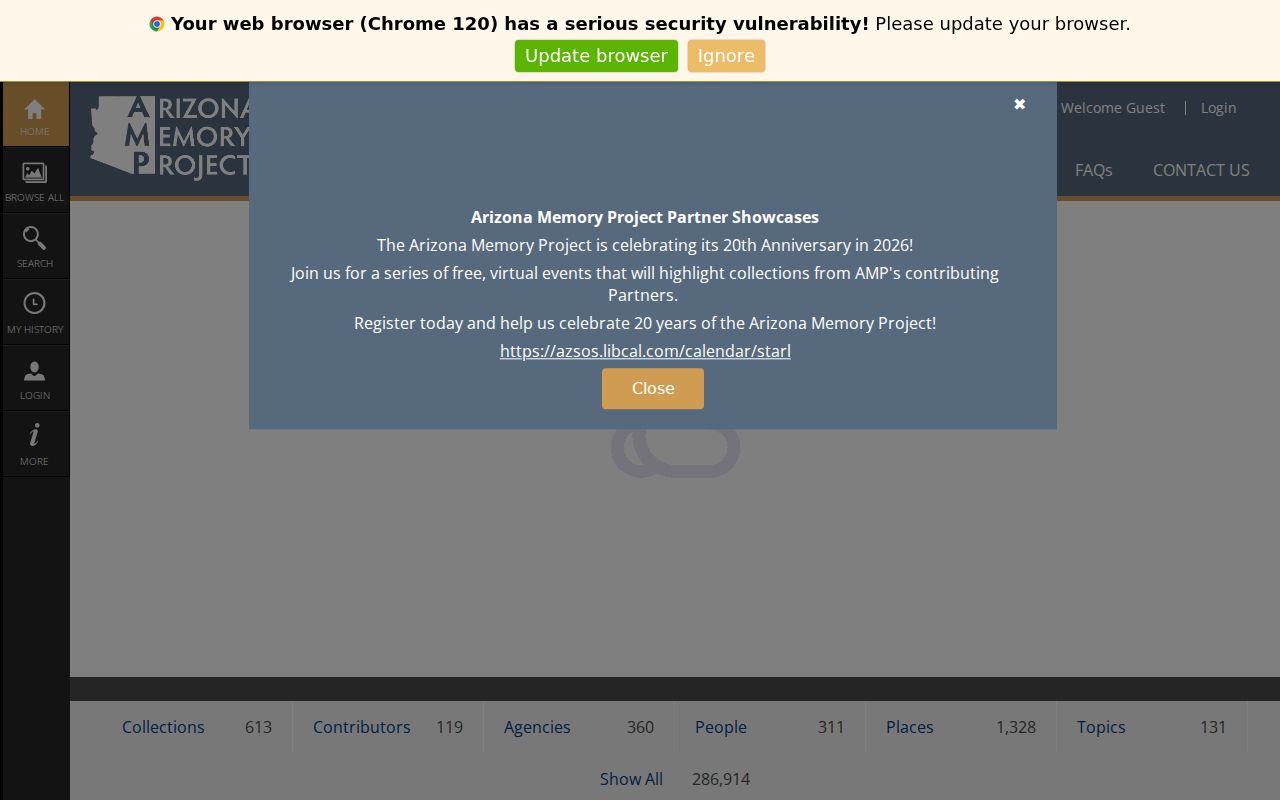
The archive screen provides the catalog entry point, while each item record supplies the provenance needed to cite a Phoenix directory page.
Verified item records show changing publishers. The 1936 volume came from Arizona Directory Company and was digitized by FamilySearch International in 2019. Phoenix Directory Company published the 1945 volume. A 1955 supplement bears the Mullin-Kille name. Those differences can change order, symbols and coverage. Always use the key printed in the selected volume instead of carrying an abbreviation from another edition.
Catalog activity in 2024 added or updated several mid-century telephone and ConSurvey volumes, while a 1935 title surfaced or changed in 2026 metadata. Those dates may describe the catalog record rather than the day the scan first appeared. Search the repository live and save the item URL, title and retrieval date.
Phoenix Directory Library Channels
The Phoenix Public Library catalog offers Quick Search, Keyword, Advanced, Boolean, Browse Listings, eResources and Exact modes. One catalog record names the “Greater Phoenix Cole's directory of Phoenix.” Use the catalog to identify a title and holding before traveling, then ask staff whether access is on a shelf, in a database or through another repository.
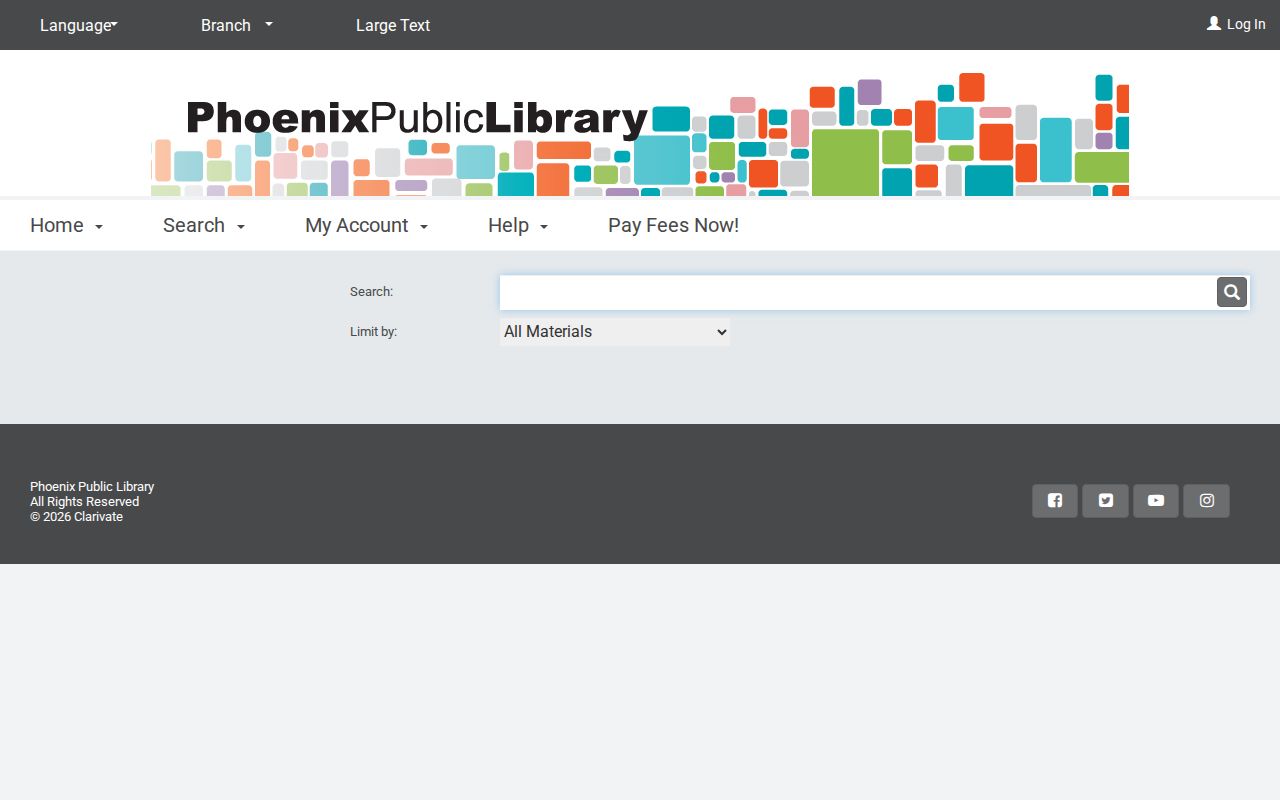
The library catalog is the local discovery route for a directory book, while Arizona Memory Project remains the verified page-image source.
Phoenix Public Library research collections provide the wider database path. Burton Barr Central Library, at 1221 N. Central Avenue, is also a federal depository and can route questions through its research services. Call 602-262-4636 before a visit when a specific volume or reader is required.

The research page shows the companion channels that help when a Phoenix directory name needs support from newspapers or other local material.
Phoenix Directory Archive Requests
The State Research Library offers a focused staff request for a three-year directory window or a two-week newspaper window. More than ten copies or scans can incur fees. The Arizona State Archives Reading Room covers permanent government series and genealogy material when a Phoenix title or companion record is not online.
The Arizona Historical Society library and archives adds manuscripts and family papers that can extend a city directory clue. Ask about restrictions, staff-search limits, reproduction rights and preferred citations before requesting a scan. A catalog result should lead to the holding repository, not a claim that every item can be opened from home.
Decode a Phoenix Directory Entry
A Phoenix city directory entry is a compact claim tied to one publication. The inspected 1899-1900, 1945 and 1946-47 volumes commonly place surname before given name or initials. Later entries may put a spouse in parentheses. An occupation and named employer can separate two same-name people, while a residence marker points to a house number, street or cross-street.
| Indexed name | Surname, given name or initials; search compound names, hyphens, omitted accents and married-name variants |
|---|---|
| Household clue | Spouse in parentheses in some later books; widow and title notations depend on the key |
| Work detail | Occupation and sometimes the named employer, useful for telling same-name residents apart |
| Residence | A house marker and address or cross-street, interpreted with that edition's abbreviations |
| Business or civic listing | Business name, telephone, office, title, department or City Hall location |
| Confidence check | Original page, title leaf and key, not OCR text alone |
- Criss-cross directory
- An address-first section that groups entries by street or telephone. It appears in some editions, not every Phoenix volume.
- Householder index
- A list centered on the named person associated with an address. Its wording does not prove that every household member was included.
- Abbreviation key
- The edition's own legend for residence marks, titles and status notes. Read or save it before transcribing entries.
- OCR
- Machine-read text derived from a scanned page. It speeds name searches but can misread type, spacing and columns.
A directory may use language that is obsolete or offensive. Transcribe it accurately for the record, then add context. Do not modernize the original wording inside a quotation or silently turn an uncertain initial into a full name.
Phoenix Directory Formats Changed
Phoenix grew from a territorial town to a city, county seat and state capital, while its directories changed scope and publisher. The collection timeline marks format changes, not a claim that every year survives.
| Point in time | Phoenix directory evidence |
|---|---|
| 1899-1900 | Verified Phoenix City Directory with alphabetical resident entries |
| 1903 | Business Directory of Phoenix, Tempe and Mesa broadens the geographic frame |
| 1912-1914 | Phoenix and Salt River Valley titles, plus a Phoenix and Maricopa County directory |
| 1925-1930 | City, valley, business and Mountain States telephone formats overlap |
| 1936 | Arizona Directory Company volume with item-level digitization provenance |
| 1945-1955 | Phoenix Directory Company, later city volume and Mullin-Kille supplement survive in verified records |
Criss-cross and telephone sections vary by year. Never state that all later volumes support address-first search. Mid-century ConSurvey and telephone books may order names and addresses in ways unlike an older alphabetical city book. The exact last printed Phoenix directory year was not verified.
Note: A directory's publication year is evidence for that edition, not proof that the household stayed at the address all year.
Trace Phoenix Families by Directory
Family research works best as a sequence of dated observations. A Phoenix city directory can place a person near an address in one edition, while a census names the household on one enumeration day. A deed proves a transfer, and an obituary may explain an endpoint. Keep those claims separate until they agree.
- Choose the nearest verified directory year and search the surname, initials, compound forms and alternate spellings.
- Open the original image. Save the title, page, entry and abbreviation key, then transcribe spouse, occupation, employer and home address.
- Move to the closest earlier and later available editions. Bracket a move, marriage or disappearance without guessing what caused it.
- Pair the directory with the released federal census for that decade. Use neighbors, age, birthplace and family members to separate same-name people.
- Test the address with a Sanborn map or the owner with a Recorder deed, probate record, newspaper or obituary reference.
The loss of most 1890 federal census schedules makes the 1890 and 1893 Phoenix map period and the 1899-1900 directory especially useful. An absence can mean a move, death, missed publication, changed name, exclusion or OCR failure. It does not support one answer on its own.
Phoenix Community Archives Add Names
Standard city directories can understate the lives of residents whose communities were not well represented by mainstream publishers. ASU Community-Driven Archives, the Greater Arizona Collection, Black Collections and the Chicano/a Research Collection preserve oral histories, photographs, yearbooks, newsletters and organization records that restore context around a sparse directory entry.
Search these collections by surname, neighborhood, church, school, photographer and event. A yearbook proves an association with an institution in a stated year, not later Phoenix residence. Oral history may use a nickname or later recollection. Keep the collection identifier, narrator or creator and date so another researcher can inspect the source.
Phoenix neighborhood eras also guide the companion search. Downtown and Roosevelt favor territorial and early city material. Garfield and the historic central districts lead toward early and mid-century books. Maryvale points to postwar directories. Sunnyslope can require annexation context, while South Phoenix research benefits from bilingual newspapers and community archives that preserve Mexican American and Black history.
That human record does not replace the city directory. It explains who was missing, how a name was used and why a family may appear differently across publishers.
Verify Phoenix Directory Addresses
The Library of Congress Phoenix Sanborn maps identify editions from January 1889, November 1890, June 1893 and July 1901, plus a linked 1915 through November 1949 volume. They depict building footprints, materials and use. They do not name the resident. Use them to test whether an address or structure existed and to understand a renumbered block.
Phoenix replaced several north-south street names with numbers in 1893. Annexation also moved parcels from county geography into the city. A historical address may therefore need an old map, legal description and directory page before it can be tied to a modern lot. Modern address-keyed work is handled in the Phoenix street directory lookup.
When online access ends, ask the State Research Library for its narrow directory search, use the Arizona State Archives Reading Room, check the Phoenix Public Library catalog or contact the Arizona Historical Society. A near-year directory plus census, newspaper, map or deed evidence is stronger than treating a missing scan as a missing person.