
Phoenix Resident Lookup Sources
No single public roll confirms that a person now lives at a Phoenix address. Each source proves a different fact. The Maricopa County Assessor ties a named owner to a parcel, while the Recorder ties named parties to filed documents. Courts report case roles and events. Current birth and death files remain confidential, and voter data follows strict access rules. A sound resident lookup begins by choosing the record that can answer the exact question, then checks that result against an independent source.
| Record | Fact It Can Support | Phoenix Access Point | Access Boundary |
|---|---|---|---|
| Property roll | Owner, situs address and parcel number | Maricopa County Assessor | Owner is not proof of occupancy |
| Recorded documents | Named role, deed date and legal parcel | Recorded Document Search | Name keyed; broad searches may cap results |
| Court cases | Party role, events and disposition when public | Arizona Public Access | Partial index with sealed and court-specific gaps |
| Vital records | Birth, death, marriage or divorce event | Arizona Vital Records | Eligibility, identity and confidentiality rules |
| Voter information | Registration status, districts and participation history | Arizona Voter Information Portal | Self-authentication or an authorized request |
| Business and license files | Entity or professional affiliation | Arizona licensing directory | Contact address is not residence proof |
Start with the most distinct fact. A parcel number is stronger than a common surname. A case number is stronger than a name alone. For a family-history question, an old certificate index or directory may be the right first stop. For a current parcel owner, use the Assessor and then follow its deed reference to the Recorder. Renters and other household members may leave no trace in either property source.
Search Phoenix Court Records
The statewide court search begins with a CAPTCHA, then offers case-number or first-name and last-name routes. Court and county filters may help. Its limits matter in Phoenix: the system covers most Arizona courts, but Maricopa Superior Court contributes only criminal matters there, while Maricopa Justice Courts contribute only delinquent cases. Probate, sealed cases, protection orders, mental-health matters, victim data, and several juvenile categories are excluded.
| Search Control | Use | Important Detail |
|---|---|---|
| Verification text | Required CAPTCHA | Submit it before the search form opens |
| Case number | Direct alternative | Exact formatting can matter |
| First and last name | Party-name alternative | Test full and shortened name forms |
| Court or county | Optional narrowing | Available choices vary |
A blank statewide result is not proof that no file exists. Check the Maricopa Superior Court docket, the Clerk's minute entries, and the municipal channel when the case type calls for them. Court administrative records use a Rule 123 request, while case files and marriage licenses go to the Clerk. Phoenix Municipal Court accepts records questions by email or at 602-262-6421.
The official Arizona eAccess service shows the document route available after the basic index.
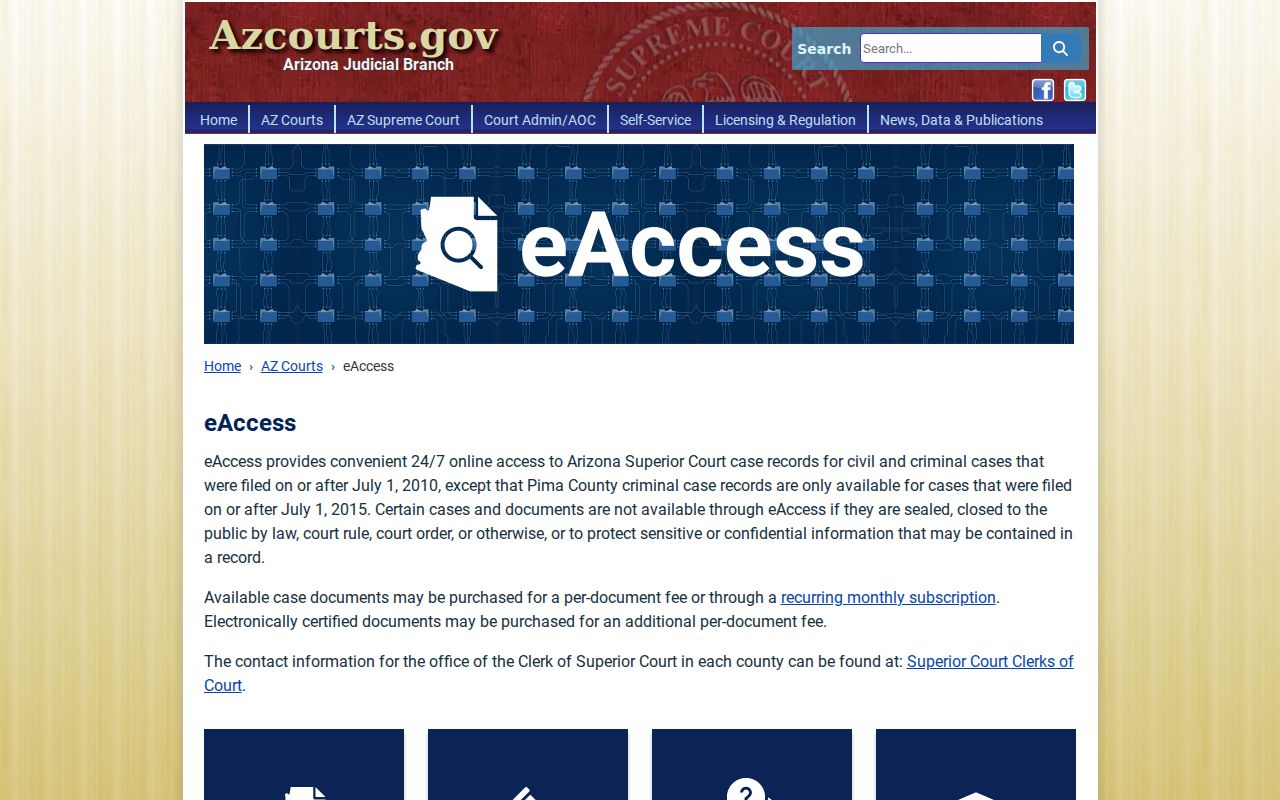
That account-based service covers eligible Superior Court civil and criminal documents filed on or after July 1, 2010, with restricted files excluded.
Verify Phoenix Resident Identities
Same-name errors are the main risk in a one-person search. Compare a middle initial, co-owner or spouse, parcel number, legal description, court role, filing date, and a stable address link. One matching field is weak. Two records that agree on several independent details make a far better match. A clerk can explain how to obtain a file, but should not be asked to decide which same-name person is the target.
- Search the person's name in the Assessor roll. Record any parcel number, situs address, mailing address, co-owner, and linked deed number.
- Use the linked deed number or owner name in the Recorder index. Confirm the legal description and the person's role in the instrument.
- Run name variants through the correct court channels. Compare the court, case role, dates, and any address that is lawfully displayed.
- Use a vital, voter, business, or license record only for the narrow fact it can support. Keep protected and restricted facts out of the search.
- Request a certified copy from the custodian when legal proof is needed. An online index alone is a finding aid.
- Docket
- A dated list of filings, hearings, orders, and other events in a court case.
- Index versus image
- An index points to a record. An image shows the filed document and may have separate access terms.
- Certified copy
- A copy the record keeper attests is a true copy of the official file.
Note: Keep a short source log with the search date, exact query, office, and record number so later corrections can be traced.
Read Phoenix Docket Results
A court result must be read as a case entry, not as a broad statement about a person. The statewide screen may show a case number, court, case type, party name and role, charge or event details, filed dates, and a disposition or status. Data is updated weekly, not live. The basic tool does not sell the underlying image. Use the court custodian or eAccess when the actual filed paper is needed.
- Case number and the court that owns the record
- Case category or type
- Party names and roles
- Filed dates, events, and public charge information
- Disposition or status when the source supplies it
- A document icon in eAccess when a file can be purchased
The Maricopa docket search screen is a key local fallback for a Phoenix resident lookup.
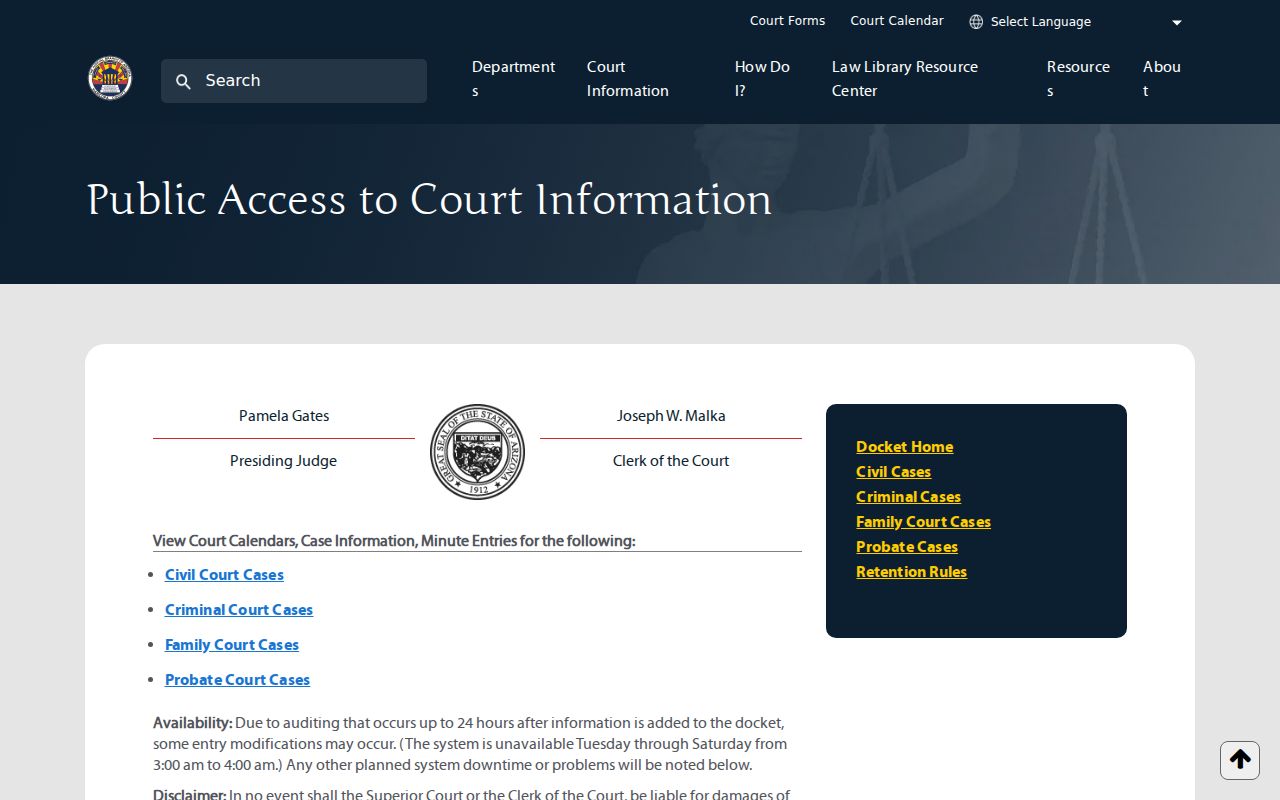
Use the docket to identify the file and then contact the Clerk for copies, certification, or correction of a court entry.
Phoenix Vital Record Boundaries
Arizona birth and death records are confidential under A.R.S. §36-324. The Arizona Department of Health Services and the Maricopa County Office of Vital Registration issue copies only through their stated eligibility and identity rules. A current resident lookup cannot treat those certificates as an open name list. The current forms ask for event facts, applicant identity, relationship or legal interest, proof, signature, copy count, and payment.
Historical research follows a different path. A.R.S. §36-351 supports transfer and research access, and the State Archives genealogy catalog identifies births before 1928 and deaths before 1953. Those are fixed catalog statements, not rolling promises. Marriage licenses are Clerk records. Divorce papers are Superior Court files. For an obituary or biographical lead, the Arizona Biographical Database may point to books, newspapers, periodicals, obituaries, and vertical files, but it is not complete.
When online access fails, use the live application, mail route, walk-in option where offered, or a participating county office. The state death form calls for valid ID or a notarized signature, proof of relationship, an original signature, a self-addressed stamped envelope, and the correct fee. Eligibility comes first.
Phoenix Voter Lookup Limits
The Arizona Voter Information Portal is a self-service check, not a public browse of Phoenix names or streets. County instructions use date of birth and a driver-license or state-ID number for authentication. A successful account view can report registration status, election districts, notices, ballot-by-mail status, and participation history. Participation does not disclose ballot choices.
A.R.S. §16-168 allows certain voter fields in authorized records, but full lists are purpose-limited. Protected voters under A.R.S. §16-153 may have identifying facts sealed. The Arizona Address Confidentiality Program also gives qualifying survivors a substitute mailing address and confidential mail forwarding. It does not erase older public documents. A no-result can reflect a failed login, protected status, suspension, or cancellation, so it cannot by itself prove that someone left Phoenix.
For an authorized voter-record request, use the Maricopa County Recorder request channel. The request must meet the statutory purpose and certification rules.
Confirm Phoenix Professional Clues
Arizona corporations and limited liability companies are filed with the Corporation Commission, not the Secretary of State. An entity search can reveal a legal name, type, status, filing date, known place of business, statutory agent, principals, and filed documents. Optional trade names use a separate Secretary of State search. These are useful identity clues, yet an agent or principal address is not proof of a home.
Licenses add a second check. Search the board tied to the activity, then compare the number, status, issue or expiration data, classification, and named role. Phoenix has no single universal city business license, so the right board or filing office depends on the activity. Restaurant inspection records identify an establishment and inspection date; they do not prove who was present each day.
The official Arizona nursing license lookup illustrates a board-specific resident verification route.
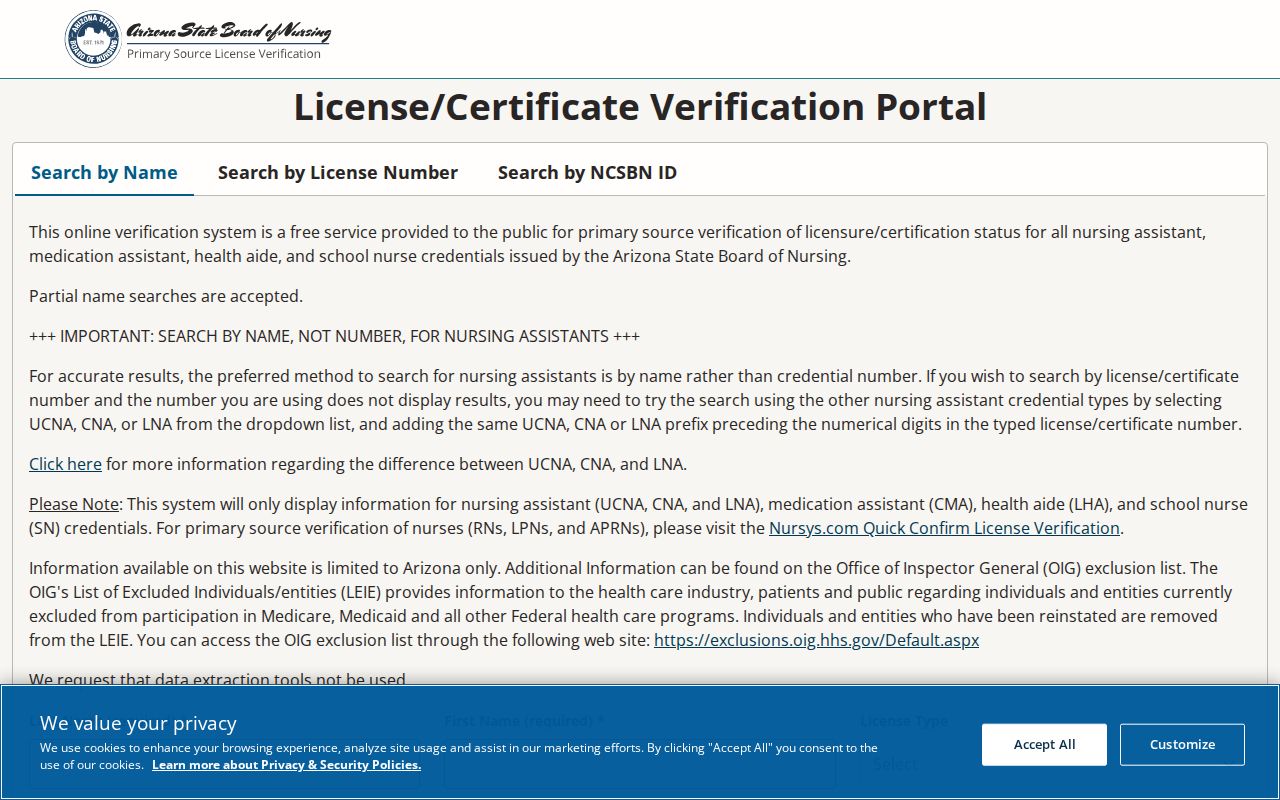
Match a license entry to another official record before treating a shared or contact address as a current Phoenix residence.
Phoenix Reconnection Channels
Some searches have a clear personal aim. Probate petitions, notices, and deeds of distribution can help identify an heir. Yearbooks, alumni archives, and community collections can reconnect classmates. A birth-parent search must use Arizona's authorized adoption or confidential-intermediary process, never restricted birth files. Because the exact current program form was not verified in the research, begin with the responsible state or court channel and ask for the current lawful process.
A public-record request is a fallback, not a demand that an agency build a person profile. Arizona Public Records Law, A.R.S. §§39-121 through 39-161, opens existing records for inspection subject to exceptions and calls for prompt copies. Identify the record, date range, office, and known reference number. Send city material to the City of Phoenix request gateway; send deeds, voter records, court files, and vital files to their own custodians.
Correct Phoenix Resident Records
Corrections belong with the office that created the source. Send parcel or valuation errors to the Assessor. Direct deed-index or recorded-document questions to the Recorder. The County Recorder handles voter record issues. Court docket errors go to the individual court clerk, and permit data goes to Phoenix Planning and Development. A commercial compilation may keep an old association even after the source is fixed, while removal from a compilation does not delete the official record.
Keep copies of requests and replies. State what appears wrong, cite the record number, and supply only the proof the office asks for. Do not send identity papers to an unknown service. For identity theft help, use the Arizona Attorney General identity-theft resources. A careful correction protects the record trail without claiming that all copies across the web will change at once.
Phoenix Resident Lookup Limits
Honest dead ends are common. Property records omit renters and most household members. Motor-vehicle and utility data are not open resident rolls. Court portals exclude protected cases. Current certificates require eligibility. Voter records can be sealed, and the self-tool cannot browse a block. Commercial compilations may merge names or retain old links, so their claims need verification at the original office.
A lookup should stop when a record is confidential or the search would intrude on a protected person. Arizona stalking and harassment laws apply even when one fact began in a public file. The Address Confidentiality Program and county restriction laws exist because some addresses carry real safety risks.
Lawful use. Use a Phoenix resident lookup only for lawful personal research. Never use a public record to stalk, harass, threaten, or harm anyone.